A tankless water heater warms water only when you turn on a tap. The system reads the flow, heats the water as it moves, and sends a steady stream to your shower or sink. Your home uses hot water every day, and the way you heat it makes a big difference in comfort and cost.
This guide explains how to pick the best tankless water heater, how its system works, its benefits, the right fit, and what to know about fuel types, costs, and care. It also helps you compare tank and tankless models so you can choose the one that fits your home and your daily routine.
If you need help choosing the right system, call our team at 830 331-2055 for professional guidance tailored to your home’s setup.
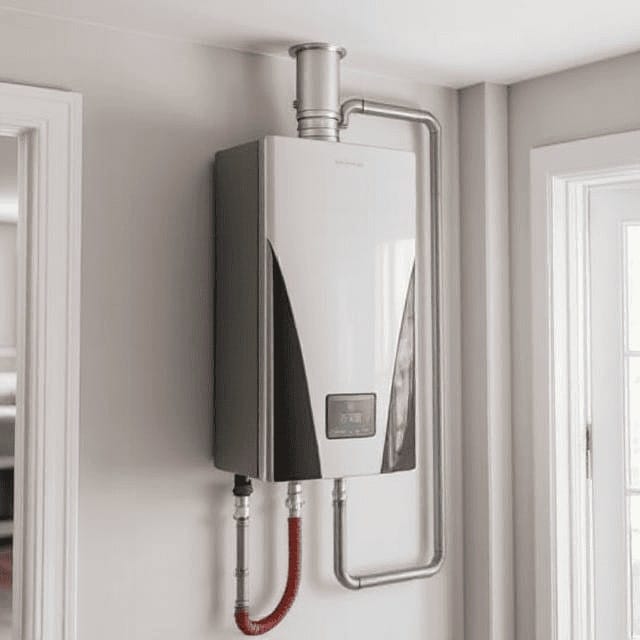
What a Tankless Water Heater Is and How It Works
A tankless water heater is a system that heats water only when you turn on a tap. The system has sensors that detect flow, a burner or electric element that warms the water as it passes through, and a control board that maintains a steady temperature.
You get hot water because the unit warms the water as it passes across the heat exchanger. The system stops heating once you close the tap.
This simple process saves space and removes the need for a large storage unit. Many homes in Boerne use these systems because they handle the local mineral-rich water well when maintained.
Advantages of Tankless Heaters for Boerne Homes
A tankless system offers steady hot water, lower energy use, more space, better performance in hard water, and lasts longer.
Here are the main advantages:
- Longer life
A tankless unit can last around twenty years because it does not store standing water that can rust the inside of the unit.
- Steady hot water
The system heats water as it flows, so you do not run out during long showers or back-to-back use.
- Lower energy use
The system does not keep a full container warm all day, which helps reduce energy use in many homes.
- Smaller build
The unit mounts to a wall, freeing floor space in small utility rooms or garages.
- Better performance in hard water when cleaned each year
Hard water in Boerne can leave scale, but these units build scale more slowly because water moves through the system faster.
How Tankless Water Heaters Compare to Traditional Tank Heaters
A tank heater stores water and keeps it warm all day. A tankless unit warms water only when you open a tap. Both systems can heat your home’s water, but they deliver very different daily experiences.
Comparison Table for Tankless and Tank Water Heaters
Feature
Tankless Water Heater
Tank Water Heater
How it heats water
Heats water when you turn on a tap
Heats and stores a full tank of water
Hot water supply
Steady flow when sized correctly
Limited to the size of the tank
Recovery time
No recovery time needed
Slow recovery once the tank runs out
Energy use
Lower energy use because no standby heat loss
Higher energy use because the system reheats all day
Life span
About twenty years
About ten to fifteen years
Space needed
Small wall-mounted unit
Large tank that takes up floor space
Hard water impact
Scale forms, but it’s easier to flush
Scale collects on the whole tank interior
Ideal homes
Homes with steady or high use
Homes with simple or low-use patterns
What Size Tankless Water Heater Do I Need for My Home?
Tankless hot water heater sizing depends on the flow rate and temperature rise. Flow rate is the total gallons per minute your home uses at one time. Temperature rise is the difference between your incoming water and your target water temperature.
Texas groundwater temperature ranges around 65°F for much of the year. Most homes want hot water at about 120°F, so the system must raise the temperature by roughly 55°F.
Tankless Water Heater Size Chart
Home Use Situation
Estimated Flow Needed (GPM)
Temperature Rise Needed
Suggested Tankless Size
One shower only
2.0 to 2.5
About 55 °F
6 to 7 GPM unit
Shower plus sink
3.0 to 3.5
About 55 °F
7 to 8 GPM unit
Two showers at once
4.0 to 5.0
About 55 °F
9 to 10 GPM unit
Shower plus laundry
4.0 to 5.5
About 55 °F
9 to 11 GPM unit
Large family home with many fixtures
6.0 to 8.0
About 55 °F
11 to 12 GPM unit or two smaller units
These numbers change if your home has long plumbing runs, older pipes, or strong well pumps. The chart provides a starting point, but your final choice should align with both the number of fixtures and your daily habits.
How Water Flow Affects the Sizing You Choose
Your system must heat enough water to supply every tap that might run at the same time. When more taps run, the heater needs a higher flow rate to keep the water hot. This is why flow matters when choosing the right option.
Each fixture uses a set flow:
- Standard shower uses about 2 gallons per minute
- Bathroom faucet uses about 1 gallon per minute
- Kitchen faucet uses about 1.5 gallons per minute
- A washing machine uses about 2 gallons per minute
You add these numbers to match your home’s needs. This gives you the total flow your heater must support. In this way, you can find your ideal unit by following the steps in our tankless water heater size guide.
Natural Gas, Propane, or Electric Tankless Water Heaters in Boerne
Gas and propane units heat water faster and work well for higher-flow homes, while electric units fit smaller spaces and lower-use homes.
Here is a look at how each fuel type works and when it fits best:
- Natural gas units
These units work well in homes with a steady gas line. They heat water quickly and support high-flow use.
- Propane units
These units are suitable for rural homes that use propane tanks. They give strong heating for homes without city gas lines.
- Electric units
An electric unit works well in small homes or tight spaces. It uses electric elements and needs a strong power from the panel.
What Affects the Cost of Tankless Water Heaters in Boerne
The cost of a water heater depends on the model you choose, the fuel type your home uses, and the work needed to prepare your space for the new system.
Here are the main factors that change the price:
Factors That Increase Cost for Some Homes
- Bigger gas lines are needed for intense heating
- New vent path added for safe exhaust
- Electrical panel upgrades for electric units
- Water treatment is needed for hard water
- Pipes placed in tight or hard-to-reach spots
Factors That Lower Cost During a Replacement
- Vent path already in the right place
- Pipes are easy for a plumber to reach
- Electrical panel is strong enough for the unit
- Short pipe runs between the heater and fixtures
- Simple swap of a similar old unit
Installation Tips for Tankless Water Heaters in Your Home
To install a tankless heater correctly, you need a setup that provides safe venting, a steady fuel supply, and enough water flow to heat your water.
Here are the key tips that protect your heater and help it work at full strength:
- Pick a protected location to prevent frozen water lines
Place the heater in a garage or utility room so cold air cannot freeze the water lines. This helps the heater stay warm enough to run during winter nights.
- Check your fuel or power capacity so the unit does not shut off
Gas and propane units need strong fuel pressure. Electric units need enough power from the panel. A trained technician measures these levels so the heater does not shut off when demand increases.
- Add flush ports during installation to control hard water scale
Flush ports let you clean the heater once a year. This keeps scale from building up in Boerne’s mineral-rich water. This step protects the heat exchanger and keeps the flow steady.
- Use proper venting to move exhaust safely outside
Correct venting keeps carbon monoxide out of your home. It also protects your warranty, as manufacturers list exact vent-placement rules.
- Install a sediment filter to protect the heat exchanger
A filter catches small particles before they enter the heater. This lowers scale buildup and keeps the unit working smoothly for many years.
- Place shutoff valves where you can reach them during emergencies
Easy access lets you stop the water or fuel in seconds if something goes wrong. This simple step protects your home during repairs or storms.
Cons of Tankless Water Heaters
Tankless water heaters come with a higher upfront price, extra installation needs, and reduced flow when several fixtures run at once.
Here are some of the cons:
- The starting cost is higher than that of a tank model.
- Some homes need stronger gas, propane, or electric lines before installation.
- The flow may drop if too many taps run at one time in a large home.
- The unit needs yearly cleaning to handle Boerne’s hard water.
Talk With Our Local Plumber About Tankless Water Heaters in Boerne
If you want steady hot water and a strong system for your home, our team is ready to help. We give clear guidance, trusted work, and constant support through every step. Our local crew knows Boerne homes well, so you get advice that fits your way of life.
Why choose us?
- Award-winning local plumbing team
- Emergency help is available at any hour
- Strong workmanship you can trust
- Trained plumbing technicians on every job
- Careful work from a dependable crew
- Fast and affordable repairs for common issues
- Real person response at all times
Call 830 331-2055 to learn what model fits your home and your daily use.
FAQs
What is the most common problem with tankless water heaters?
The most common problem with tankless water heaters is weak hot water flow. This happens when scale builds up inside the unit and slows the water.
How to size a tankless water heater?
To size tankless water heaters, you match the total gallons per minute you use during your busiest time. You then choose a model that can heat that flow to your target temperature.
Can I replace my tank heater with a tankless one?
You can replace your tank heater with a tankless one, but some homes need new gas, propane, or electric lines. A technician checks your setup before installation.