
The main signs your plumbing system needs an inspection include:
- Low water pressure points to a leak
- Slow drains that return after cleaning
- Water stains on walls or ceilings
- Higher water bills without extra use
- Noises from pipes during use
- Standing water in the yard
- Smells from the drain or outside
- Corrosion on fixtures or fittings
- Water heater noise or heat loss
- Toilets that run or flush weakly
- Discolored or cloudy water
- Damp or mold smell in hidden areas
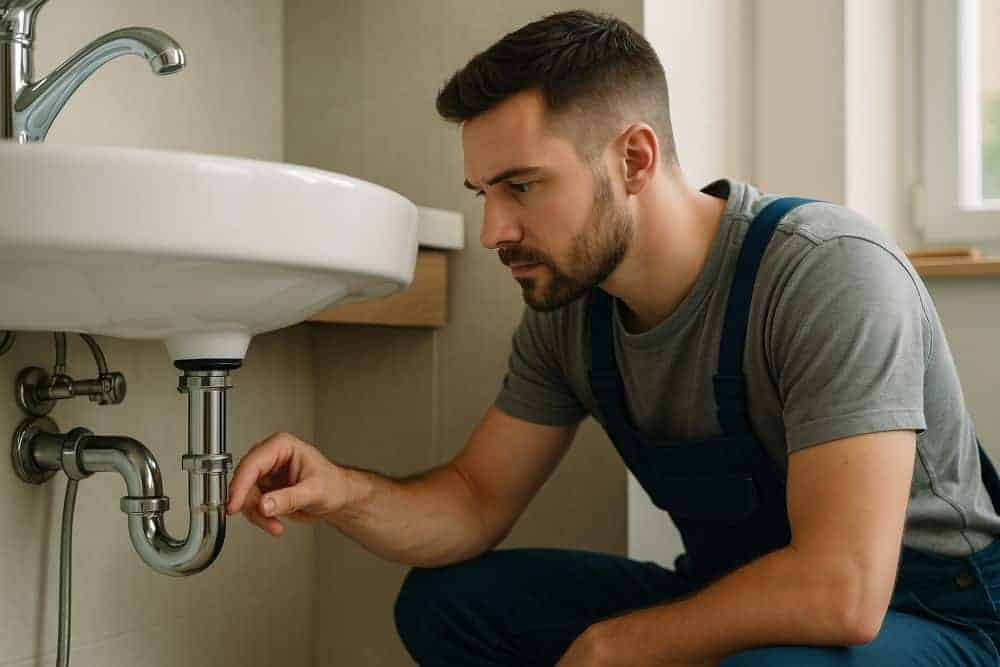
Plumbing issues grow quietly inside walls and under floors. Hard water leaves mineral buildup inside fixtures, and older pipes in some areas show signs of wear over time.
Limestone soil can shift and change the path of buried lines. These conditions create slow changes in your system that turn into leaks, stains, or drainage problems.
This guide helps you spot signs early so you can act before the damage spreads. Call 830 331-2055 for a professional inspection in Boerne, TX.
12 Signs Your Plumbing Needs an Inspection
Plumbing inspection signs include low water pressure, slow-draining sinks, water stains, and rising water bills. You should also look for pipe noises, standing water in the yard, and drain smells. Next, check for corrosion on fixtures, water heater issues, toilet problems, cloudy water, and damp smells.
Below, we discuss the signs that indicate your home needs a complete evaluation.
1. Low Water Pressure Signals a Leak or Blockage in Your System
Low pressure appears when water cannot move normally through the line. This happens when a pipe leak reduces volume or when buildup restricts flow. You may notice weak taps in bathrooms or sinks. Check other fixtures to see if the issue is isolated or home-wide.
2. Recurring Slow Drains Show a Developing Blockage in Your Drainage Line
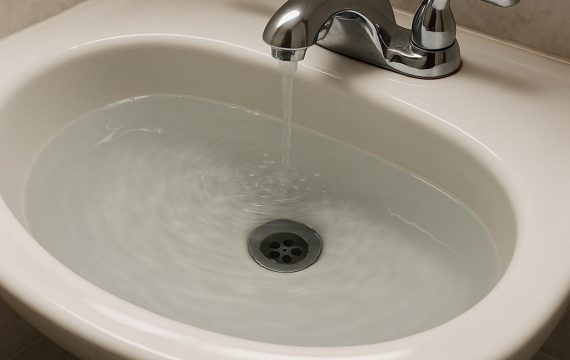
Slow drain that returns after cleaning points to a deeper clog. Hair, grease, and soap buildup create narrow channels inside the drain. If several sinks empty slowly at the same time, the main line may be affected. This sign should not be ignored because it grows slowly.
3. Water Stains Reveal Hidden Leaks Inside Your Walls or Ceiling
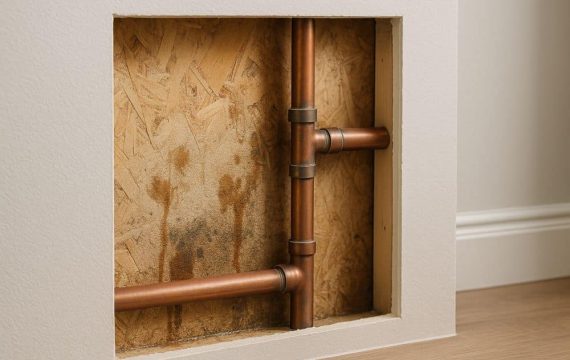
Water stains mark areas where a steady leak is soaking hidden spaces. You may see brown spots on drywall or patches on ceilings. Water moves through the wood inside the wall and creates more damage over time. These stains often show up before you see any surface leaks.
4. Higher Water Bills Show Water Loss From a Hidden Issue
A sudden rise in your water bill means water is leaving the system somewhere. Small water leaks can waste hundreds of gallons a month. Compare your bill with previous months. If nothing has changed in your routine, schedule checks to find the source.
5. Strange Pipe Sounds Warn You About Pressure Changes or Loose Fittings
Pipes make sounds when air pressure or movement affects the water line. Tapping or rattling may happen when a pipe is not secured. Whistling can show partial blockage or valve wear. These noises tell you that the plumbing system is under stress.
6. Standing Water in the Yard Points to a Line Damage or Irrigation Line
Water that collects in soft soil near your home may come from an underground pipe. Soft soil allows more water to escape and makes the leaks worse. This pooling grows slowly and should be checked before it reaches your foundation.
7. Bad Sink Odors Show a Venting Problem or Sewer Line Trouble
Smells from the sink opening or outdoor areas show a break in normal flow. A blocked vent or a sewer line leak allows odors to travel back into the home. If the smell appears near bathrooms or outside cleanouts, an evaluation is needed.
8. Corrosion on Fixtures or Fittings Shows Wear on Pipes and Sinks
Corrosion appears as a rust color or white mineral crust around faucets or supply lines. Hard water in Boerne speeds up this process. Corroded fittings weaken and break over time. This is an early sign that repairs or replacements may be needed.
9. Water Heater Noises or Heat Loss Shows Sediment Buildup Inside the Tank
A heater makes noise when sediment collects at the bottom. This reduces heat transfer and forces the heater to work harder. You may notice warm water that fades quickly. These signs grow slowly and should be checked before the tank fails.
10. Toilets That Run or Flush Poorly Show Valve Wear or Drain Blockage
A toilet that runs after each flush wastes water and signals valve issues. Weak flushing shows poor drainage or buildup inside the line. Both problems grow over time and can lead to leaks around the base.
11. Discolored or Cloudy Water Shows Pipe Wear or Sediment Movement
Cloudy water may appear when lines carry rust or minerals into taps. This often shows up first in hot water. This sign tells you that your system needs checks for wear.
12. Damp Smells or Moisture Patches Show a Slow Leak in a Hidden Spot
A damp smell is one of the earliest signs of a hidden problem. Moisture collects behind cabinets, near sinks, or inside walls. These spots grow slowly and can cause water damage if left unchecked.
Call Our Team for Local Plumbing System Inspections in Boerne
A plumbing system inspection helps you catch problems early before they turn into water damage. Our licensed team carefully tests pipes, drains, and fixtures. We use camera tools when sewer line issues appear and explain each finding in simple steps.
Call 830 331-2055 to schedule your service with us and get clear answers about your system.
What Happens During a Professional Plumbing Inspection in Boerne
During an inspection in Boerne, our licensed plumber looks for leaks, corrosion, slow drainage, and other signs that your home needs repairs.
During the plumbing inspection process, our plumbers will:
- Check visible pipes for leaks or corrosion
- Test sinks, toilets, and drains for flow issues
- Measure water pressure at several fixtures
- Review the water heater for sediment buildup
- Check valves and supply lines for wear
- Confirm drainage flow in kitchens and bathrooms
- Use camera tools when sewer line issues appear
- Explain the findings and suggest the next steps
Call 830 331-2055 to learn more.
FAQs
How often should plumbing be inspected?
Plumbing should be inspected once a year. This schedule helps you catch leaks, stains, and corrosion early.
When do you need a plumbing inspection?
You need a plumbing inspection when you notice low pressure, stains, rising bills, pipe noises, or slow drains. You also need it when buying or selling a home in Boerne.
What do plumbing inspectors look for?
Plumbing inspectors look for:
- leaks
- corrosion
- low pressure
- stains
- blockages
- valve issues
- slow drain
- sewer line concerns
How much does it cost to have a plumbing inspection?
A plumbing inspection usually costs between $100 and $1300 for a standard home. The cost can be higher when camera checks or sewer line reviews are needed.
What should homeowners do before the plumber arrives?
Before the plumber arrives, the homeowner should:
- Move items away from sinks and water heaters
- Clear the area near toilets and tubs
- Unlock outdoor gates for access
- Secure pets
- Write down the signs you have seen
- Check that cleanout caps are reachable
How do you tell if you have a plumbing issue?
You can tell you have a plumbing issue when you see changes in your regular water use or leaks in your home. You may notice low pressure, slow drainage, wall stains, or higher water bills. You may also hear noises in pipes or smell odors from drains.